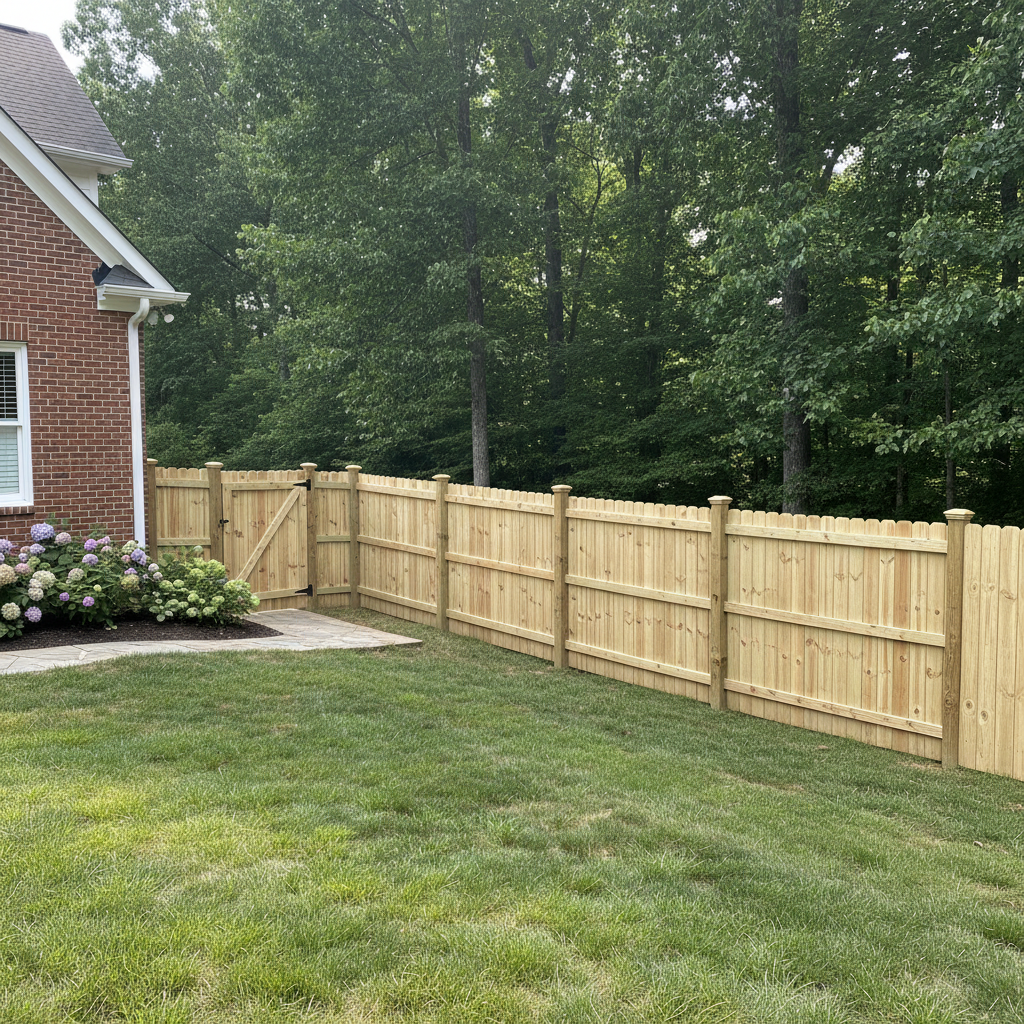
When you are planning a wood fence for your Rockford property, timing matters more than many people realize. You cannot just put up cedar or pressure-treated pine whenever you want and expect it to hold its ground against East Tennessee weather. Rockford Fencing Solutions has seen what happens when projects are rushed through the wrong months, and fixing a leaning fence a year later is a problem you do not want to deal with.
The Truth About Rockford Soil and Post Depths
Our local dirt is not the easiest to work with. Down here in Blount County, we deal with heavy clay loam and silt loam that loves to hold onto moisture. When those wet spells hit, the earth expands; when July and August dry it out, it shrinks. That constant shifting will push right against shallow posts and start twisting your panels out of alignment.
That is why standard shortcuts fail here. If a crew tries to cut corners by digging shallow holes or skipping the concrete, your wood fence will not survive two seasons of our regional weather cycles. Rockford Fencing Solutions always digs deep enough to anchor past that active surface layer, setting every post securely in wet concrete so your boundary stays straight and true.
Picking the Right Season to Build
Spring brings heavy rains that can turn a job site into a muddy mess, making it tough to get heavy equipment rolling without tearing up your lawn. Late summer and early autumn usually offer a much steadier window for Wood Fence construction. The ground is firmer, and the air is not soaking wet, which gives concrete the ideal conditions to cure properly around your posts.
- Late summer gives dry, stable soil for easier Wood Fence digging.
- Fall offers cooler temperatures for outdoor physical labor on your wood fence.
- Winter brings freezing nights and moisture that can interrupt fresh concrete curing for any Wood Fence project.
Winter is not totally off-limits for every phase of construction, but freezing temperatures play tricks on wet concrete and fresh sealants. If you are mapping out a wood fence project, getting on the schedule before the late-year dampness sets in is always the right move.
Protecting Your Wood Investment Year-Round
Wood fences take a beating from the elements. Between the summer humidity and the constant temperature swings, unprotected lumber will start to gray, warp, and invite rot at the ground line. Giving your wood fence a quality stain or sealant is not just about looks; it creates a barrier against moisture penetration.
Keep an eye on the bottom boards, too. If mulch or dirt builds up against the bottom of your wood fence, it traps moisture against the pickets and speeds up decay. Keep that lower edge clear, trim back aggressive weeds, and check your gate hardware after heavy windstorms. A little bit of seasonal maintenance goes a long way toward keeping your yard looking sharp and keeping your wood fence standing strong for the long haul.