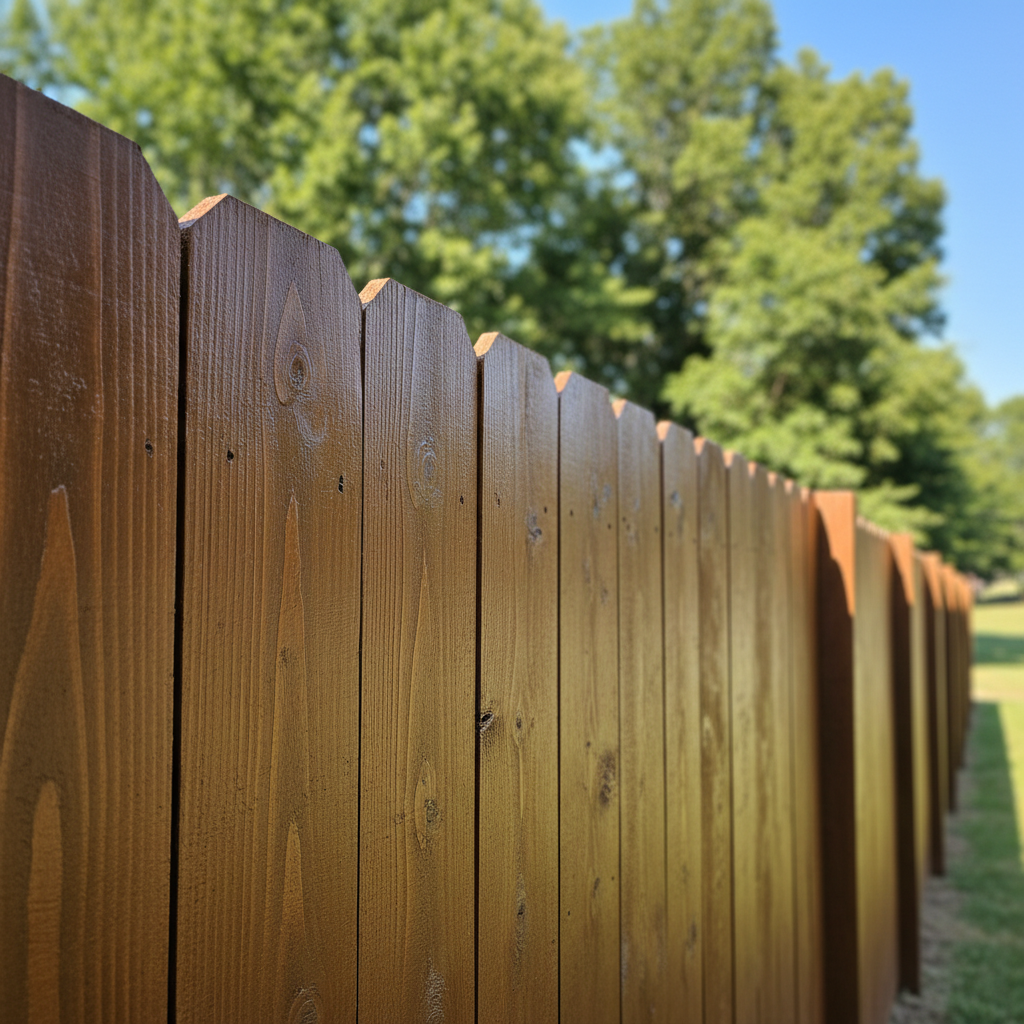
Should you stain your wood fence or grab a paintbrush? That is one of the most common questions we hear from homeowners around Rockford, TN. Our local weather puts exterior wood through demanding conditions. Between the heavy humidity rolling off the river and those sudden summer storms that drop gallons of water in twenty minutes, unprotected lumber does not stand a chance. It warps, turns gray, and starts rotting faster than you would think.
Here is what you actually need to know before you crack open a can, what the job takes during the process, and how to figure out if you should tackle it this weekend or hire someone else to do it.
Before You Start: Prep and Product Choices
Wood prep makes or breaks the entire project. If you try to stain a fence that is still holding internal moisture from pressure treatment, or one covered in a layer of green mildew common in shaded Rockford yards, the finish will fail within a year. New wood needs a few months to dry out completely. Older wood needs a thorough cleaning.
- Test the wood by splashing water on it; if it beads up, you are not ready to stain because the old sealer is still blocking absorption.
- Pick semi-transparent stain over solid paint if you want to show off the grain and avoid peeling flakes later down the road.
- Clear out your Rockford garage and grab a pump sprayer, a stiff-bristled brush, drop cloths, and proper safety gear before doing anything else.
During the Project: DIY vs. Hiring Out
Can you do this yourself? Absolutely. Staining a standard backyard boundary fence is a classic weekend DIY job. It does not require complex carpentry skills, just patience and a willingness to get dirty.
You will want to spray the stain on in manageable sections using an airless or pump sprayer, but do not just walk away. Always follow right behind with a brush to work the liquid deep into the grain and catch any drips. If you skip the back-brushing step, the coating sits too heavy on the surface and fails prematurely.
Where do you draw the line and call Rockford Fencing Solutions instead? If your fence runs two hundred feet long across sloping, uneven terrain, or if it has intricate shadowbox designs and heavy weathering that requires intense power washing and chemical stripping, your weekend project suddenly turns into an exhausting three-day marathon. Sometimes it is worth trading your Saturday to let professionals handle the heavy lifting with commercial-grade equipment.
After the Finish: Maintenance Realities
Once the job is done, give it ample time to cure before heavy rains or lawn sprinklers hit it. Keep an eye on how it handles the seasons. A good semi-transparent oil or high-grade water-based stain should hold up for a few years before it needs a refresher coat. Walk your fence line every spring, look for areas taking a beating from direct sun or wet soil, and you will keep that wood looking solid for the long haul.